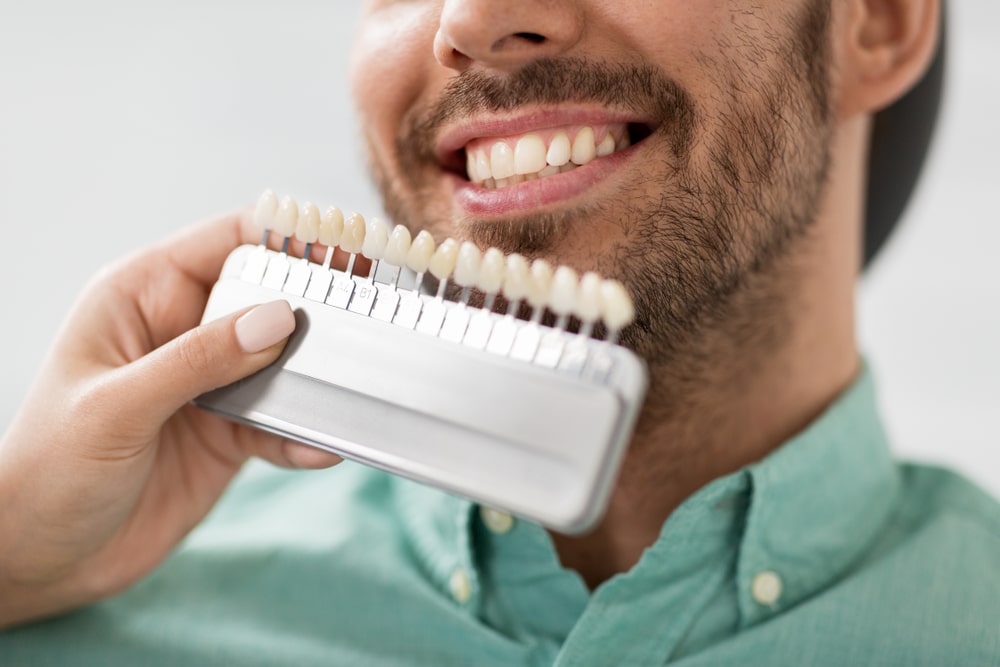
Porcelain veneers are thin, custom-made restorations designed to improve the appearance of the front surfaces of the teeth. They can address concerns involving color, shape, proportion, minor spacing, and other cosmetic imperfections. Because veneers are created to blend with the surrounding smile, they can provide a refined result while allowing treatment to be tailored to each patient’s unique dental and facial features.
Emerald Dental in Oceanside, CA, and McCall Dental in Sun City, CA, offer cosmetic treatment that emphasizes balancing appearance, function, and long-term oral health. Gulalai Matin, DDS, has completed advanced education in cosmetic dentistry, smile makeovers, full-mouth rehabilitation, and occlusion. That background supports careful treatment planning so your dentist can evaluate whether veneers are appropriate for your goals or whether another option may better suit your needs.
What Are Porcelain Veneers?
Porcelain veneers are very thin shells that are bonded to the front surfaces of selected teeth. Each veneer is designed to improve a tooth’s visible shape, color, or symmetry while coordinating with the rest of the smile.
Porcelain is commonly chosen for veneers because it closely resembles natural enamel and resists staining. The shade, contour, and proportions of each restoration can be customized to create a balanced result rather than an overly uniform one.
What Can Porcelain Veneers Improve?
Veneers may be considered when cosmetic concerns affect one or several visible teeth.
They can help address:
-
Persistent tooth discoloration
-
Small chips or worn edges
-
Uneven or irregular tooth shape
-
Minor gaps between teeth
-
Teeth that appear too short or narrow
-
Mild asymmetry in the smile
-
Surface imperfections
-
Cosmetic concerns that do not respond well to whitening alone
Veneers are not necessarily the right solution for every cosmetic issue. Your provider will also consider bite alignment, enamel health, gum condition, and the amount of available tooth structure.
What Happens During the Veneer Process?
Treatment begins with a cosmetic evaluation and discussion of your goals. Your dentist may review the shape, color, position, and proportions of the teeth to determine how veneers could change the overall appearance of the smile.
A small amount of enamel may need to be removed from the front surface of the tooth so the veneer can fit naturally without looking bulky. Impressions or digital records are then taken so the restorations can be created to the planned dimensions.
Temporary veneers may be placed while the final restorations are being made. At the final appointment, your provider evaluates the fit, shade, and bite before bonding the porcelain veneers securely to the teeth.
Are Porcelain Veneers Permanent?
Porcelain veneers are considered a long-term cosmetic treatment because preparing the teeth typically involves removing some enamel. Once a tooth has been prepared for a veneer, it will generally continue to need a restoration in the future.
Veneers can last for many years with proper care, although they may eventually need replacement due to wear, damage, or changes in the surrounding teeth and gums.
That is why a careful consultation is important before moving forward. Your dentist can explain the expected amount of enamel preparation and help you decide whether veneers fit your long-term goals.
How Should You Care for Porcelain Veneers?
Veneers should be cared for much like natural teeth. Daily brushing, cleaning between the teeth, and regular dental visits remain important for maintaining the health of the teeth and gums around the restorations.
Patients should also avoid habits that can place unnecessary stress on veneers, such as biting hard objects or using the teeth as tools. If you grind or clench your teeth, your provider may discuss whether an oral appliance could help protect the restorations.
Good oral hygiene is especially important because the natural tooth structure beneath and around a veneer can still develop decay.
Porcelain Veneers vs. Dental Bonding
Both veneers and dental bonding can improve cosmetic imperfections, but they differ in material, preparation, and durability.
Dental bonding uses composite resin applied directly to the tooth and is often appropriate for smaller corrections. Porcelain veneers are custom-made restorations that cover the visible surface of a tooth and may provide greater durability, stain resistance, and control over more extensive cosmetic changes.
Bonding may involve less alteration to the tooth, while veneers can offer a more comprehensive smile transformation. Your dentist can compare both approaches based on the changes you want.
Why Choose Emerald Dental or McCall Dental for Porcelain Veneers?
Successful veneer treatment depends on more than selecting a lighter shade or changing the shape of individual teeth. The restoration should also work with the patient’s bite, facial proportions, and neighboring teeth.
Dr. Matin has pursued advanced training through aesthetic dentistry programs focused on comprehensive smile design and occlusion, including coursework through The Hornbrook Group Advanced Clinical Education. Her broader experience in restorative dentistry and full-mouth rehabilitation also provides perspective when cosmetic changes need to coordinate with crowns, implants, or other existing dental work.
At Emerald Dental and McCall Dental, your provider can discuss your priorities, evaluate your teeth, and explain whether veneers or another cosmetic approach is likely to provide the most appropriate result.
Explore Porcelain Veneers in Oceanside or Sun City, CA
Porcelain veneers can create meaningful changes in the color, shape, and balance of a smile while maintaining a natural appearance. A cosmetic consultation can help determine whether veneers are a good match for your teeth, bite, and aesthetic goals. Call Emerald Dental in Oceanside, CA at 760.722.0137 or McCall Dental in Sun City, CA at 951.723.1188 to schedule a consultation for porcelain veneers.