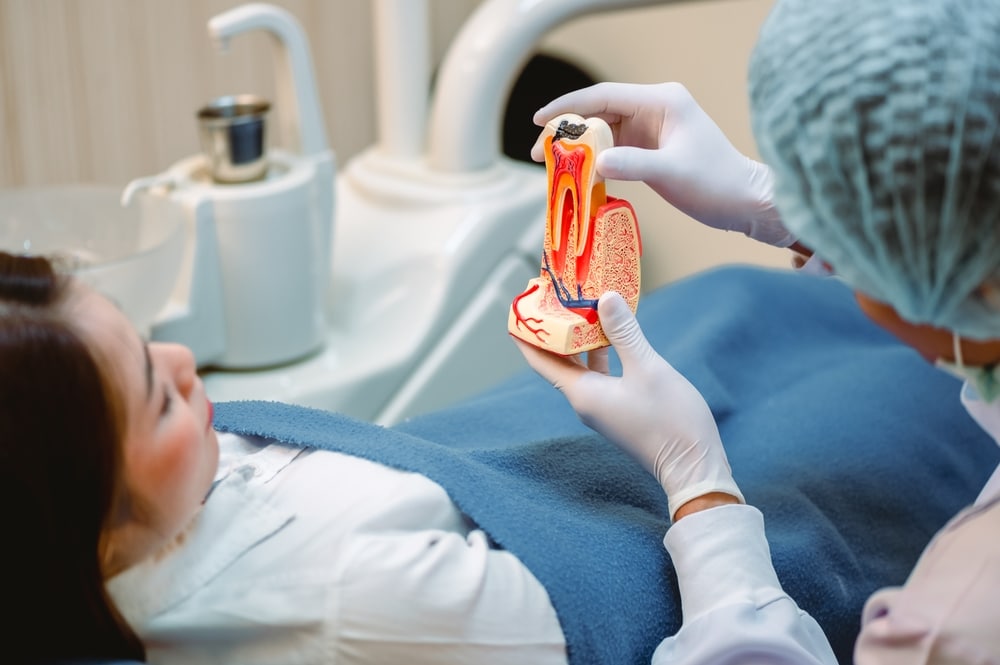
A root canal is a procedure specifically designed to help save a tooth that has become severely inflamed or infected. Our teeth have several layers, including the pulp at the center. A tooth’s pulp contains nerves, blood vessels, and connective tissue. When this area becomes inflamed or infected because of decay, injury, or another problem, root canal treatment may be recommended to remove the damaged tissue and preserve the natural tooth.
At Emerald Dental in Oceanside, CA, and McCall Dental in Sun City, CA, patients can receive evaluation and treatment for painful or infected teeth in a setting focused on comfort and clear communication. Gulalai Matin, DDS, has spent more than two decades caring for patients across general and restorative dentistry, including treatment involving dental infections and damaged teeth. Her experience working with patients who feel nervous about dental care has also shaped an approach centered on making treatment easier to understand and manage.
How Do I Know if I Might Need a Root Canal?
When the pulp becomes inflamed or infected, you may begin to experience symptoms that prompt you to seek dental care. However, some teeth requiring root canal treatment cause few or no obvious symptoms, which is why a professional examination is important.
Possible warning signs include:
Toothache
Toothaches are common and can have several causes, but persistent or significant pain may point to inflammation or infection inside a tooth. Pain may occur spontaneously, worsen when chewing, or interfere with sleep.
Abscess
A bump on the gums near a tooth, swelling, drainage, or pus may indicate a dental infection. An abscess should be evaluated promptly because infection may spread beyond the affected tooth.
Sensitivity
Lingering or severe sensitivity to hot and cold foods or beverages can sometimes indicate that the pulp has been damaged or inflamed.
Discoloration
A tooth that becomes noticeably darker than the surrounding teeth may have experienced trauma or changes involving the pulp. Discoloration does not always mean a root canal is necessary, but your dentist should evaluate the cause.
Other symptoms may include tenderness when biting, swollen gums, or a tooth that feels different from the surrounding teeth.
What Causes a Tooth to Need Root Canal Treatment?
The pulp is protected by the tooth’s outer layers, but bacteria or trauma can sometimes reach this sensitive inner area.
Common reasons a tooth may require root canal treatment include:
-
Deep tooth decay
-
Cracks or fractures
-
Repeated dental procedures on the same tooth
-
A damaged or leaking restoration
-
Trauma or an injury to the tooth
-
Infection around the tooth root
Your dentist may use an examination and dental X-rays to determine whether the pulp is affected and whether root canal treatment may help save the tooth.
What Happens During a Root Canal?
During root canal treatment, your provider creates an opening in the tooth and removes the inflamed or infected pulp from inside. The inner canals are then carefully cleaned, shaped, and disinfected before being filled and sealed.
Local anesthetic is typically used to numb the treatment area and help keep the procedure comfortable.
A root canal may be completed in one visit or over multiple appointments depending on the tooth, the extent of infection, and the complexity of the canals. Your provider can explain what to expect based on your individual case.
Will I Need a Dental Crown After a Root Canal?
Many teeth benefit from a dental crown after root canal treatment, particularly molars and premolars that withstand substantial chewing pressure. Teeth that have undergone root canal therapy may also have lost structure because of decay, fractures, or previous restorations.
A crown can help protect and reinforce the remaining tooth while restoring its shape and chewing function.
However, not every root canal-treated tooth requires the same final restoration. A front tooth with substantial healthy structure, for example, may have different restorative needs. Your dentist will evaluate how much tooth remains and recommend the appropriate next step.
Don’t Wait to Have Persistent Tooth Pain Evaluated
If you notice recurring pain that does not seem to stop, significant sensitivity, swelling, or other changes around a tooth, contact your dentist for an evaluation. Dental pain can have many possible causes, and identifying the source early may provide more treatment options.
When root canal therapy is appropriate, preserving the natural tooth can help maintain normal chewing function and avoid the space left by an extraction.
Severe swelling, fever, or swelling that affects swallowing or breathing warrants prompt medical attention.
What Happens After Root Canal Treatment?
Some tenderness around the treated tooth can occur after the procedure, particularly if infection or inflammation was present beforehand. This typically improves as the surrounding tissues heal.
Once treatment is complete, your dentist will tell you when to place the final restoration. Maintaining the tooth afterward involves the same fundamentals as caring for your other teeth: regular brushing and flossing, routine dental examinations, and avoiding habits that could fracture or damage the restoration.
Your provider may also take follow-up X-rays, when appropriate, to monitor healing around the root.
Why Choose Emerald Dental or McCall Dental for Root Canal Treatment?
When a tooth is painful or infected, patients often want both relief and a clear explanation of what can be done to preserve it. Emerald Dental and McCall Dental approach root canal care as part of the larger goal of maintaining natural teeth whenever appropriate.
Dr. Matin’s clinical experience spans general dentistry, dental infection treatment, restorative care, crowns, and full-mouth rehabilitation. She has also continually expanded her skills through professional seminars and advanced dental education rather than relying solely on the training she received early in her career.
Equally important, more than 20 years of working with patients has given her insight into the fear and anxiety that can accompany procedures such as root canal treatment. Your dentist or provider can explain the diagnosis, review what treatment involves, and help make the process feel more predictable from the initial evaluation through the final restoration.
Save a Damaged Tooth in Oceanside or Sun City, CA
Persistent tooth pain, lingering sensitivity, or signs of infection should be evaluated, not ignored. Root canal treatment may allow your provider to remove infected or inflamed tissue while preserving the natural tooth. Call Emerald Dental in Oceanside, CA at 760.722.0137 or McCall Dental in Sun City, CA at 951.723.1188 to schedule a consultation for root canal treatment.